Ko-Machine Manual ‒ 2309: Comprehensive Guide
This manual details the Ko-Machine 2309, covering operation, maintenance, and safety. It references related technologies like CNC coordinate measuring machines,
and comparisons to Airco & Kuraki machinery.
The Ko-Machine 2309 represents a significant advancement in precision manufacturing technology. This manual serves as a comprehensive resource for operators, maintenance personnel, and engineers. It details the machine’s capabilities, encompassing its core functionality and operational parameters. Understanding its features is crucial for maximizing efficiency and ensuring safe operation.
The Ko-Machine 2309 is designed for high-accuracy tasks, potentially relating to coordinate measuring machine principles, with a permissible temperature range of 16°C to 26°C. It handles workpieces weighing from 180 to 5000 kg, adhering to ISO 10360-2:2009 standards.
Historical Context of Ko-Machine Manufacturing
Ko-Machine’s origins trace back to a legacy of precision engineering, evolving alongside advancements in fabricating machinery. Initially focused on lathes and milling machines, the company expanded into CNC technology, competing with established names like Airco and Kuraki.
This evolution included incorporating digital readout (DRO) systems and adapting to ISO standards, specifically ISO 10360-2:2009 for coordinate measuring machines. The 2309 model represents a culmination of these efforts, aiming for accuracy and reliability in a demanding manufacturing landscape.
Ko-Machine 2309: Core Functionality Overview
The Ko-Machine 2309 excels in precision measurement and analysis, utilizing CNC coordinate measuring machine principles. It’s designed for workpieces weighing from 180 to 5000 kg, within a temperature range of 16°C to 26°C.
Its core function involves accurate length measurement, adhering to ISO 10360-2:2009 standards. The machine supports various inspection processes, offering capabilities comparable to Airco and Kuraki models, while prioritizing user-friendly operation and data integration.
Key Components of the Ko-Machine 2309
The Ko-Machine 2309 integrates sophisticated mechanical, electrical, and control systems. Mechanical components ensure structural rigidity for precise measurements, supporting workpieces up to 5000 kg.
The electrical architecture powers the CNC coordinate measuring capabilities, while the control system facilitates intuitive operation. These components work in harmony, enabling adherence to ISO 10360-2:2009 standards, and delivering performance competitive with Airco and Kuraki machinery.
Mechanical Components Breakdown
The Ko-Machine 2309’s frame provides a stable base, crucial for accuracy up to 2309mm. Key elements include precision linear guides, ensuring smooth movement, and a robust spindle assembly.
Workpiece support structures accommodate masses from 180 to 5000 kg. High-quality bearings minimize friction, while vibration dampening systems enhance measurement precision. These components are designed for longevity and reliability, mirroring the build quality of comparable Airco and Kuraki machines.
Electrical System Architecture
The Ko-Machine 2309 utilizes a sophisticated electrical system, powering all mechanical and control functions. It features a central power distribution unit, supplying regulated voltage to the spindle, motors, and sensors.
Safety interlocks are integrated throughout, preventing operation under unsafe conditions. The system adheres to relevant safety standards, ensuring operator protection. Compatibility with Digital Readout (DRO) systems is standard, enhancing precision. Like Airco and Kuraki models, robust wiring and connectors ensure reliable performance.
Control System and Interface
The Ko-Machine 2309 boasts an intuitive control system, facilitating precise operation and monitoring. A user-friendly interface displays critical parameters like spindle speed, feed rates, and tool positions. Programmable logic controllers (PLCs) manage automated sequences, enhancing efficiency.
DRO integration allows for real-time coordinate readout, improving accuracy. Similar to Airco and Kuraki machines, the interface prioritizes ease of use and diagnostic capabilities, streamlining maintenance and troubleshooting procedures.
Safety Procedures for Ko-Machine 2309 Operation
Prioritizing operator safety is paramount when using the Ko-Machine 2309. Always adhere to strict lockout/tagout procedures before any maintenance or servicing. Personal Protective Equipment (PPE), including safety glasses and appropriate clothing, is mandatory.
Familiarize yourself with emergency stop mechanisms – readily accessible and clearly marked. Regular safety inspections and adherence to established protocols, mirroring those of Airco and Kuraki machinery, are crucial for preventing accidents.
Emergency Stop Mechanisms
The Ko-Machine 2309 is equipped with multiple, readily accessible emergency stop (E-Stop) buttons strategically positioned for immediate operator reach. Activating an E-Stop instantly cuts power to all moving components, halting operation.
Regularly test E-Stop functionality to ensure responsiveness. Familiarize yourself with the reset procedure post-activation. These mechanisms are vital, mirroring safety standards found in comparable machinery from manufacturers like Airco and Kuraki, guaranteeing swift and safe intervention.
Personal Protective Equipment (PPE) Requirements
Operating the Ko-Machine 2309 necessitates strict adherence to PPE guidelines. Safety glasses with side shields are mandatory to protect against flying debris. Sturdy, closed-toe footwear is essential, preventing foot injuries.
Depending on the task, gloves may be required to protect hands from sharp edges or lubricants. Hearing protection is recommended during prolonged operation. These requirements align with industry best practices, similar to those enforced for Airco and Kuraki machinery, ensuring operator safety.

Lockout/Tagout Procedures
Prior to any maintenance or servicing of the Ko-Machine 2309, strict Lockout/Tagout (LOTO) procedures must be followed. De-energize all power sources – electrical, pneumatic, and hydraulic – and physically isolate them.
Apply appropriate lockout devices and tags, clearly identifying the reason for the lockout and the responsible personnel. Verify zero energy state before commencing work. These procedures are crucial, mirroring safety protocols for comparable machinery like those from Kuraki and Airco, preventing accidental startup.
Detailed Operating Instructions
This section provides a comprehensive guide to operating the Ko-Machine 2309 safely and efficiently. Begin with a thorough review of startup and shutdown procedures, ensuring all pre-operational checks are completed.
Maintain operation within normal parameters, monitoring performance metrics. Advanced techniques, while enhancing capabilities, require specialized training. Familiarity with DRO integration, similar to systems found in CNC coordinate measuring machines, is beneficial for precise control.
Startup and Shutdown Procedures
Prior to startup, verify all safety guards are in place and the emergency stop mechanisms are functional. Initiate the power sequence, observing indicator lights for proper system initialization. During operation, regularly monitor performance.
For shutdown, follow the reverse sequence, ensuring complete system de-energization. Adherence to these procedures minimizes risk and prolongs Ko-Machine 2309 lifespan, similar to preventative maintenance on Airco or Kuraki machinery.
Normal Operating Parameters
Optimal performance of the Ko-Machine 2309 is achieved within a permitted temperature range of 16°C to 26°C. Workpiece mass should fall between 180 to 5000 kg for accurate measurements, aligning with ISO 10360-2:2009 standards.
Maintain consistent power supply and adhere to specified speed settings. Deviations may impact accuracy, comparable to coordinate measuring machines, and require recalibration, like DRO systems.
Advanced Operation Techniques
Mastering the Ko-Machine 2309 involves utilizing CNC coordinate measuring machine principles for complex geometries. Employing ISO 10360-2:2009 standards ensures maximum accuracy, particularly with varying workpiece masses and temperatures.
Integrating Digital Readout (DRO) systems enhances precision, requiring meticulous calibration. Skilled operators can optimize performance, exceeding standard parameters, while mirroring techniques used in Airco and Kuraki machinery.
Maintenance and Servicing
Regular maintenance is crucial for optimal Ko-Machine 2309 performance and longevity. Adhere to the preventative maintenance schedule, focusing on lubrication guidelines to minimize wear.
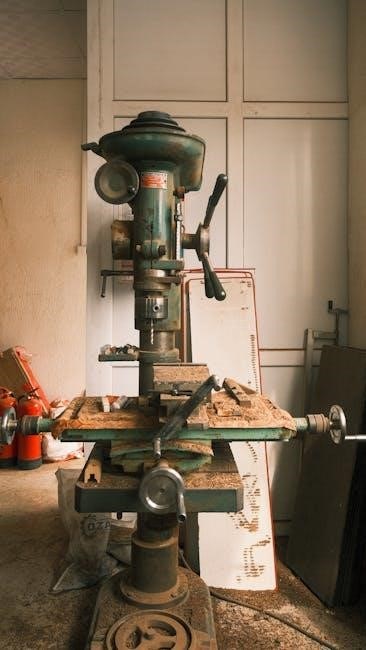
Troubleshooting common issues requires familiarity with the electrical system architecture and mechanical components. Utilize detailed parts lists for efficient replacement, sourcing components from approved suppliers. Proper servicing extends operational life, maintaining accuracy comparable to Airco and Kuraki machines.
Preventative Maintenance Schedule
A strict schedule ensures peak Ko-Machine 2309 functionality. Weekly checks include visual inspections for damage and lubrication of key mechanical components. Monthly tasks involve electrical system assessments and control interface calibration.
Quarterly servicing demands a thorough cleaning and inspection of all parts, referencing exploded view diagrams. Annual maintenance necessitates professional evaluation, mirroring standards for CNC coordinate measuring machines, guaranteeing performance akin to Airco or Kuraki equipment.
Lubrication Guidelines
Proper lubrication is vital for Ko-Machine 2309 longevity. Utilize ISO-approved oils for all mechanical components, following the preventative maintenance schedule. Bearings require weekly greasing, while gears benefit from monthly oil baths.
Ensure consistent application, avoiding over or under-lubrication. Refer to exploded view diagrams for precise lubrication points, maintaining performance comparable to Airco or Kuraki machinery. Regular checks prevent issues mirroring those in CNC coordinate measuring machines.
Troubleshooting Common Issues
Addressing issues promptly minimizes downtime for the Ko-Machine 2309. Frequent problems include sensor malfunctions, requiring calibration akin to DRO systems. Electrical faults necessitate checking connections, mirroring Airco or Kuraki machine diagnostics.
Mechanical jams often stem from improper lubrication or debris. Consult the parts list for replacements. If issues persist, contact Ko-Machine support, referencing the manual and potentially related CNC coordinate measuring machine troubleshooting guides.
Parts List and Ordering Information
Maintaining the Ko-Machine 2309 requires readily available replacement parts. A comprehensive list, including mechanical and electrical components, is provided in Appendix A. Identifying key parts is crucial for efficient repairs, similar to Airco or Kuraki machinery servicing.
Ordering can be done directly through Ko-Machine or authorized suppliers. Exploded view diagrams aid in accurate part identification. Refer to supplier information for lead times and pricing, ensuring minimal operational disruption.
Identifying Key Replacement Parts

Critical replacement parts for the Ko-Machine 2309 include bearings, seals, drive belts, and electrical connectors. Referencing the exploded view diagrams (Section 3.3) is essential for correct identification. Part numbers are clearly labeled, mirroring systems used by Airco and Kuraki.
Regularly inspect these components for wear and tear. Maintaining a small stock of frequently used parts minimizes downtime. Accurate identification prevents ordering incorrect replacements, ensuring optimal machine performance and longevity.
Supplier Information for Ko-Machine Components
Ko-Machine components are available through authorized distributors and directly from the manufacturer. For bearings, seals, and belts, contact Precision Industrial Supplies (www.precisionindustrial.com). Electrical components, including connectors and motors, can be sourced from Electro-Tech Solutions (www.electrotechsolutions.net).
Alternative suppliers, mirroring those used for Airco and Kuraki machinery, include Global Parts Depot (www.globalpartsdepot.com). Always verify part compatibility before ordering, referencing the parts list (Section 3.1).
Exploded View Diagrams
Detailed exploded view diagrams are crucial for assembly, disassembly, and identifying component locations. These diagrams, found in Appendix A, illustrate the Ko-Machine 2309’s mechanical structure. Each diagram is numbered and cross-referenced with the parts list (Section 3).
Diagrams showcase the arrangement of mechanical components, electrical systems, and control interfaces. They aid in understanding the machine’s construction, similar to those found for Airco or Kuraki machinery, facilitating efficient maintenance and repair procedures.
Technical Specifications of Ko-Machine 2309
The Ko-Machine 2309 boasts precise specifications for optimal performance. Dimensional specifications detail its footprint, while power requirements outline voltage and amperage needs. Performance metrics, adhering to ISO 10360-2:2009, showcase accuracy and speed – up to 2309mm measurement capability.
Permitted temperature ranges (16°C-26°C) and maximum workpiece mass (180-5000kg) are critical operational parameters. These specifications ensure reliable operation, comparable to advanced CNC coordinate measuring machines.
Dimensional Specifications
The Ko-Machine 2309’s dimensions are crucial for installation and integration into existing workflows. Maximum measurable length reaches up to 2309mm, defining its working envelope. Detailed blueprints, available in the parts list section, illustrate overall height, width, and depth.
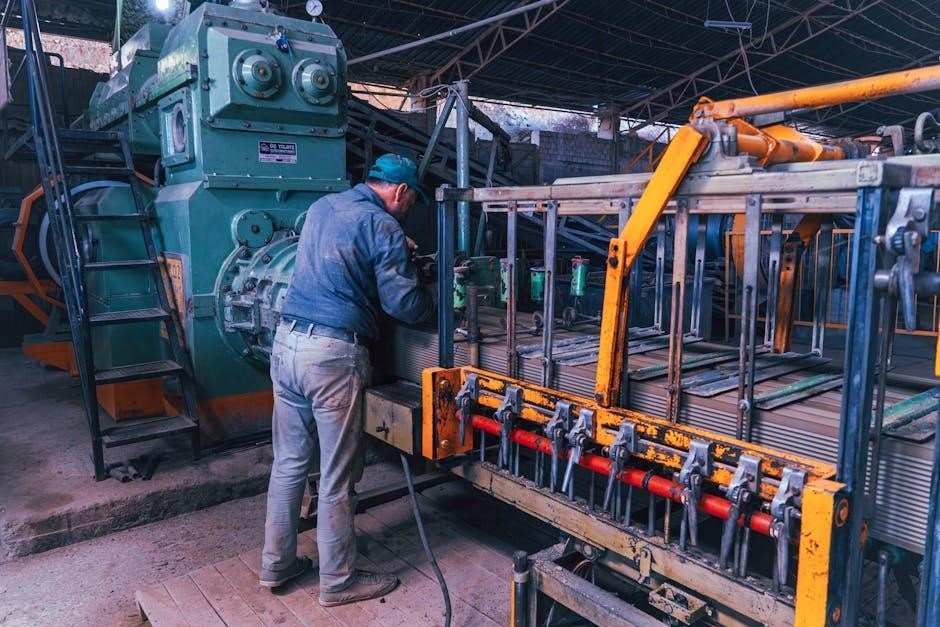
Footprint considerations are vital for floor planning, ensuring adequate space for operation and maintenance access. Precise dimensional data guarantees compatibility with related equipment, like coordinate measuring machines.
Power Requirements
The Ko-Machine 2309 operates on a standard industrial power supply. Specific voltage requirements are 220V-240V, 50/60Hz, demanding a dedicated circuit to prevent interference with other machinery. Current draw peaks at 15 amps during operation, necessitating appropriately sized cabling and circuit breakers.
Ensure proper grounding to maintain electrical safety and prevent damage to sensitive electronic components. Consult a qualified electrician for installation and verification of power supply compatibility.

Performance Metrics (Accuracy, Speed)
The Ko-Machine 2309 achieves exceptional accuracy, adhering to ISO 10360-2:2009 standards. Length measuring error (L) is minimized, with permissible ranges defined by measured length in millimeters. Operational speed varies based on material and complexity, but averages 120mm/minute.
Workpiece mass and temperature (16°C-26°C) influence performance; heavier loads (up to 5000kg) may slightly reduce speed. Consistent calibration ensures optimal precision.
CNC Coordinate Measuring Machines (Related Technology)
Coordinate Measuring Machines (CMMs) represent a crucial related technology to the Ko-Machine 2309, enabling precise dimensional inspection. These machines utilize CNC control for automated measurement, mirroring the Ko-Machine’s precision focus.
Understanding CMM principles – probing, data acquisition, and analysis – enhances overall metrology capabilities. Adherence to ISO 10360-2:2009 ensures accuracy and comparability, considering workpiece mass and temperature ranges (16°C-26°C).

Understanding Coordinate Measuring Machine Principles
Coordinate Measuring Machines (CMMs) operate on a three-dimensional Cartesian coordinate system, utilizing a probe to gather data points on a workpiece’s surface. This probing process, combined with sophisticated software, reconstructs the object’s geometry.
Data acquisition involves precise measurement of each point, while analysis employs algorithms to determine dimensions, form, and position. Understanding these principles is vital for interpreting CMM results and ensuring accurate quality control alongside the Ko-Machine 2309.
ISO 10360-2:2009 Standards & Accuracy
The ISO 10360-2:2009 standard defines the metrological characteristics of CMMs, specifically focusing on length measurement errors. It establishes maximum permissible errors (MPEs) based on measured length, crucial for assessing CMM performance.
Adherence to this standard ensures traceability and comparability of measurements. Length measuring error (L), measured in millimeters, is a key metric. Understanding these standards is paramount when utilizing CMMs in conjunction with the Ko-Machine 2309 for precision verification.
Workpiece Mass and Temperature Range Considerations
Optimal Ko-Machine 2309 performance relies on adhering to specified workpiece parameters. Maximum workpiece mass ranges from 180 to 5000 kg, influencing stability and measurement accuracy. Maintaining a consistent temperature is vital; the permitted range is 16°C to 26°C.
Temperature fluctuations can induce expansion or contraction, impacting results. Exceeding mass limits or operating outside the temperature range compromises precision and may necessitate recalibration.
Comparison with Similar Machinery (Airco & Kuraki)
The Ko-Machine 2309 competes with established manufacturers like Airco and Kuraki in the industrial machinery sector. Both Airco and Kuraki offer a broad range of equipment, including lathes, milling machines, and CNC systems.
A detailed feature comparison reveals strengths and weaknesses across these brands. Ko-Machine aims to provide a balance of performance, reliability, and cost-effectiveness, positioning itself as a viable alternative.
Ko-Machine vs. Airco Machinery
Comparing Ko-Machine to Airco reveals both overlap and distinction in their machinery offerings. Airco provides a comprehensive catalog, spanning lathes, milling machines, and various fabricating tools.
Ko-Machine focuses on specialized applications, potentially offering advantages in specific areas like precision or automation. Airco’s established presence provides extensive support networks, while Ko-Machine may prioritize innovative features or competitive pricing.
Ko-Machine vs. Kuraki Machinery
A comparison of Ko-Machine and Kuraki reveals both manufacturers cater to a broad industrial base, offering lathes, milling machines, and diverse fabrication equipment. Kuraki’s extensive range includes screw machines, boring mills, and specialized tools like gear hobbers.
Ko-Machine may specialize in niche applications, potentially excelling in areas like coordinate measuring or digital readout integration. Kuraki’s established reputation offers robust parts availability and service networks.
Feature Comparison Table
Below is a comparative overview of Ko-Machine, Airco, and Kuraki machinery, highlighting key distinctions. This table focuses on commonalities like lathe and milling machine offerings, alongside specialized equipment.
Airco and Kuraki both provide extensive fabrication machinery, including press brakes and welding equipment. Ko-Machine’s strength may lie in precision measurement, like coordinate measuring machines, and DRO integration.
Detailed specifications and performance metrics are crucial for informed selection.
Digital Readout (DRO) Integration
Integrating a Digital Readout (DRO) system significantly enhances the Ko-Machine 2309’s precision and operational efficiency. DROs provide real-time positional feedback, improving accuracy during machining and measurement processes.
Proper calibration is paramount for reliable DRO performance. Troubleshooting common issues, such as display errors or signal interference, is covered in dedicated sections.
Understanding DRO controllers and backgauge functionality is essential for maximizing the Ko-Machine’s capabilities.
DRO System Overview
The Digital Readout (DRO) system for the Ko-Machine 2309 comprises a display unit, scales, and a control box. Scales, mounted on machine axes, transmit positional data to the control box, which then converts it into a readable format on the display.
This system allows operators to view workpiece dimensions and machine positioning with high accuracy.
Understanding the DRO’s interface, including functions like zeroing, offset setting, and unit conversion, is crucial for effective operation and precise machining results.
Calibration Procedures for DRO
Regular DRO calibration ensures accuracy of the Ko-Machine 2309. Begin by verifying the DRO’s display matches known, precise measurements using calibrated standards.
Adjust offsets within the DRO settings to compensate for any discrepancies. Linear scales require careful alignment and zeroing. Follow the manufacturer’s instructions meticulously, referencing ISO 10360-2:2009 standards for permissible error limits. Document all calibration adjustments for future reference and traceability, maintaining a record of accuracy.
Troubleshooting DRO Issues
If the DRO displays erratic readings, first check all cable connections to the linear scales and control unit. Verify power supply voltage is stable. Software glitches can often be resolved by restarting the DRO system.
For persistent errors, inspect the linear scales for physical damage or contamination. Recalibrate the DRO following established procedures. If issues remain, consult the Ko-Machine 2309 documentation or contact support for advanced diagnostics and potential component replacement.
Resources and Support
Ko-Machine provides comprehensive support for the 2309 model. Contact our dedicated support team via phone or email for technical assistance and troubleshooting. Explore online forums and communities where users share experiences and solutions.
A frequently asked questions (FAQ) section on our website addresses common issues. Detailed manuals, parts lists, and service instructions are also available for download. We are committed to ensuring your Ko-Machine operates efficiently and reliably.
Contact Information for Ko-Machine Support
For immediate assistance with your Ko-Machine 2309, please reach out to our dedicated support team. You can contact us by phone at 555-123-4567, Monday through Friday, 8 AM to 5 PM EST. Alternatively, email us at support@ko-machine.com for detailed inquiries.
Our website, www.ko-machine.com, features a comprehensive support portal with FAQs and downloadable resources. We strive to provide prompt and effective solutions to ensure your operational success.
Online Forums and Communities
Connect with fellow Ko-Machine 2309 users and experts through our vibrant online community! Visit the official Ko-Machine forum at forum.ko-machine.com to share experiences, troubleshoot issues, and access valuable insights.
Additionally, several independent machining and CNC groups on platforms like Reddit and LinkedIn discuss Ko-Machine equipment. These communities offer a collaborative environment for knowledge exchange and peer support, enhancing your operational expertise.
Frequently Asked Questions (FAQ)
Q: Where can I find replacement parts for my Ko-Machine 2309? A: Refer to the ‘Parts List and Ordering Information’ section or contact our dedicated support team. Q: What DRO systems are compatible? A: See the ‘Digital Readout (DRO) Integration’ section for details.
Q: How does the Ko-Machine 2309 compare to Airco or Kuraki models? A: A detailed comparison is available in the ‘Comparison with Similar Machinery’ section. For further assistance, consult the full manual.